


Hip and ridge tiles take direct storm exposure. When fastening fails, water intrusion, tile displacement, and repair scope can spread beyond the original ridge condition. A properly specified hip and ridge anchor roof system gives contractors a controlled fastening method for hurricane-season tile work, and Trim Lock deserves direct attention because it was built to address the attachment and roof-deck perforation problems that standard anchors leave behind.
Why Ridge And Hip Tile Fastening Fails Under Storm Pressure
Florida roofers know the ridge line is not decorative trim. It is a working cap condition within the tile roof assembly, and its attachment method has to hold under wind, rain, uplift, vibration, and repeated seasonal exposure. Ridge and hip tiles sit at roof transitions where air pressure changes quickly during a storm.
Once wind starts working under loose or poorly secured pieces, the damage rarely stays isolated to one cap tile. Hurricane season turns small layout choices into failure points. A tile that shifts at the ridge can expose underlayment, open the roof to wind-driven rain, and create a path for additional displacement.
Small Ridge Failures Can Spread Quickly
One shifted ridge tile can change the way nearby roof areas respond to the next wind cycle. Fastening is the variable contractors can control before that pressure arrives.
What A Hip And Ridge Anchor Roof System Controls
A hip and ridge anchor roof system secures ridge and hip tiles with a dedicated attachment component rather than relying on mortar or field-built fastening alone. It organizes the ridge-line connection, gives installers a consistent fastening point, and reduces the uncertainty that comes with field-built attachment methods. On Florida tile roofs, that control matters because storm exposure can expose weak fastening decisions quickly.
Attachment Control Starts At The Ridge Line
Control starts with recognizing how exposed ridge and hip tiles are by design. They cover high points, directional changes, and long roof lines where wind can generate uplift and pressure shifts. Mortar may contribute to weather blocking and appearance, but it should not be treated as the only answer to fastening.
Foam, adhesive, mechanical anchoring, and metal attachment systems all have a place in the broader discussion, but the contractor still has to decide which method gives the ridge tile a reliable connection to the roof assembly.
Why ECM’s Hip And Ridge Anchor History Matters
That need for a more deliberate ridge-line connection is what makes the product history useful on the roof. East Coast Metals introduced the first metal hip and ridge anchor in the industry in 1999, which makes that origin story relevant to modern tile roof specification. The category was created because tile roofing needed a more deliberate way to secure ridge and hip conditions.
For Florida contractors, that history gives useful context because the product was shaped around the same field problem they still face today: keeping exposed tile components attached when wind starts testing the roof.
How Standard Anchors Create A Deck-Penetration Concern
A standard metal anchor can provide mechanical attachment, but it also brings an installation concern that installers and estimators should not ignore. Traditional mechanically fastened anchors depend on repeated fastening through the roof deck. Those perforations may be part of the approved installation approach, but they still add attachment points that have to be planned, sealed, and coordinated with the roof assembly.
On a tile roof exposed to heavy rain and wind-driven water, the number and placement of deck penetrations becomes part of the risk conversation.
How Trim Lock Changes The Attachment Layout
Trim Lock advances the category by addressing that deck-penetration concern through a different attachment layout. Its foam interlocking system works with the metal anchor profile to reduce the number of roof-deck perforations required in a traditional mechanically fastened layout.
Foam Interlocking And Reduced Deck Perforations
Contractors should account for the foam interlocking layout before the anchor plan is set. Trim Lock was developed to address the long-standing tradeoff between securing ridge tile and adding repeated perforations to the roof deck.
On the roof, the layout change shows up in how the ridge-line attachment is planned. A hip and ridge anchor roof system has to fasten the tile, fit the roof condition, and support the installation method without adding unnecessary complication. Trim Lock keeps that decision tied to the anchor layout rather than leaving the crew to solve ridge-line attachment through repeated deck fastening.
Trim Lock Plus And Profile Selection
Trim Lock also fits the way Florida tile roofing actually gets specified. Roof profiles, tile shapes, material exposure, and jobsite conditions vary from project to project. The product family includes Trim Lock and Trim Lock Plus, with available sizes that support different ridge and hip conditions.
Material options such as galvanized, Galvalume, aluminum, and stainless steel give contractors room to match the component to the environment, exposure level, and project requirements. Those details matter because a hip ridge roofing component that fits poorly or lacks the right material profile can create field adjustments that weaken the installation logic.
Contractors evaluating a tile ridge anchor system need to think beyond the minimum presence of an anchor. Profile fit, material compatibility, installation sequence, fastening method, and deck condition all shape the selection, and Trim Lock Plus gives contractors another profile option within the same patented product family.
How Patented Design Supports The Product Story
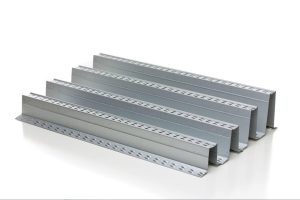
The patent history adds design context to that product story. The product family is tied to US Patent 7,739,840 and U.S. Design Patent D583,965, which supports the point that these components came from a designed and protected development process. The utility patent language describes anchor-device features such as channels, openings, flanges, fasteners, and adhesive interaction around the hip and ridge condition.
The patents should not be treated as a substitute for project-specific approval review or installation requirements. They do, however, reinforce that the system was developed around a defined hip and ridge attachment problem rather than treated as a generic metal profile.
What Florida Contractors Should Review Before Installation
For hurricane-season work, a hip and ridge anchor roof system should be evaluated as part of the roof’s wind-response strategy and planned with the same discipline as other critical tile roof components. Ridge tile attachment, deck-penetration patterns, material selection, and tile profile fit all affect how the system works in the field.
For Florida work, that review should include the roof profile, tile type, applicable product approvals, manufacturer requirements, and the installation conditions that affect how the ridge line is secured. When those details are handled late, the installer is left to solve layout problems on the roof.
Related Roof Components Need Early Planning
Related roof components need the same project-level review. Florida roof accessory packages have to account for penetrations, terminations, perimeter details, and tile profiles across the assembly.
The gooseneck ventilation system, eave closure, and other roof components need to fit the project’s wind, water, and installation requirements because generic accessory selection can create profile-fit, attachment, and water-management problems. When a contractor needs a non-standard size or profile, the custom metal shop becomes part of the same practical support system because field conditions do not always match catalog assumptions.
Why Trim Lock Belongs Early In Specification Review
Trim Lock belongs early in specification review because it changes how contractors evaluate ridge-line attachment. Anchor layout, deck penetration planning, material selection, profile fit, and crew execution all need to be settled before the job reaches installation.
A hip and ridge anchor roof plan should identify the attachment method, confirm the component fits the tile profile, account for material exposure, and reduce ridge-line improvisation before installation begins. Trim Lock and Trim Lock Plus give contractors a purpose-built option for that decision, backed by ECM’s category history and a design approach shaped around roof-deck perforation control.
For hurricane-season work, ridge fastening should be settled before the tile order reaches the job schedule. Ridge and hip tiles sit where wind pressure, water exposure, and roof geometry converge, so the anchor decision needs to be made with the same discipline as the tile profile, underlayment, and related roof components. For that reason, the hip and ridge anchor roof specification should bring Trim Lock into the discussion early.
Specify East Coast Metals Hip And Ridge Components For Florida Tile Roof Work
East Coast Metals manufactures roofing components built around real Florida roof conditions, including hip and ridge anchors, ventilation components, eave closures, and custom fabricated profiles. Contractors can specify Trim Lock or Trim Lock Plus when ridge-line fastening, profile fit, and reduced deck perforation are part of the project discussion. Contact us today for more information.
FAQs About Hip And Ridge Anchor Systems
Why Do Hip And Ridge Tiles Need A Dedicated Anchor In Florida?
Hip and ridge tiles sit along exposed roof lines where wind pressure, water exposure, and roof geometry converge. A dedicated anchor system gives contractors a more controlled attachment method than relying on mortar or field-built fastening alone.
What Makes Trim Lock Different From A Standard Metal Anchor?
Trim Lock uses a foam interlocking system with the metal anchor profile to reduce roof-deck perforations compared with traditional mechanically fastened anchor layouts. That makes the attachment layout part of the specification decision before the crew reaches the ridge line.
How Does Trim Lock Reduce Roof-Deck Perforations?
Trim Lock was developed around a foam interlocking design that reduces the number of roof-deck perforations required in a traditional mechanically fastened layout. This means reduced perforations, not eliminated perforations.
What Should Contractors Check Before Selecting A Tile Ridge Anchor System?
Contractors should review the roof profile, tile type, applicable product approvals, manufacturer requirements, material exposure, and installation conditions. Those details affect how the ridge line is secured and how the component fits the project.
Are Trim Lock And Trim Lock Plus Patented?
Yes. East Coast Metals lists US Patent 7,739,840 and U.S. Design Patent D583,965 for Trim Lock and Trim Lock Plus. Those patents support the design-history discussion, but project-specific approval and installation requirements still need to be verified.