


Moving air out of a roof is easy. Moving it out without turning the penetration into a rain entry point is the real problem a gooseneck vent was built to solve. On a Florida roof, that problem also carries wind pressure, flashing, and approval consequences, which is why contractors and specifiers evaluate a metal roof gooseneck vent as a roofing component instead of a generic exhaust accessory.
What A Gooseneck Vent Does On A Roof
Once the exhaust path has to come through the roof, the vent becomes a roofing penetration. It has to shed water, fit the roof surface, and hold at the opening.
Common examples include bathroom exhaust, kitchen exhaust, and similar routed exhaust terminations that need a weathering detail at the roof plane. The roofing work starts once that exhaust path has to come through the roof. The contractor still has to choose a vent that fits the roof profile, installs cleanly, and holds under the pressures that apply to the assembly.
That choice usually comes up when the exhaust path cannot terminate through a wall or when the roof layout makes a roof exit the better fit. In those cases, the vent has to do two jobs at once. It has to let the air path terminate above the roof, and it has to cover the opening in a way that helps keep wind-driven rain out of the assembly. That is why hood shape, throat size, roof profile fit, and flashing geometry matter before the installer ever starts cutting in the piece.
When Gooseneck Vents Are Used On Tile Roofs And Shingle Roofs
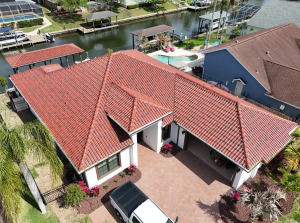
The vent function stays the same across both roof types, but the fit and flashing demands do not. Roof profile changes how the penetration is cut in, how the flange integrates, and how water has to move back onto the field.
Tile Roof Conditions
Tile roofs make the penetration tougher to fit and flash than flatter roof finishes do. A tile roof adds profile, elevation, and water-shedding geometry around the penetration. The vent pan has to sit correctly, the transition through the field tile has to be cut and flashed correctly, and the visible portion of the vent has to match the roof condition instead of fighting it. That is why manufacturers carry separate tile and shingle models rather than treating every application as the same part with a different paint color.
Those variables affect the estimation too. On tile work, profile, exposure, and visible fit influence both the piece selection and the labor required to cut in and flash the penetration cleanly.
Tile jobs raise the stakes because roof shape and exposure both work against a sloppy penetration. A vent that sits too proud, leaves open voids, or does not direct water correctly can create a call-back even before a major storm arrives. Florida roofing crews already know that the roof field, the perimeter, and the penetrations all have to work together. The same reroof that raises questions about a vent location often raises related fit and closure questions at the edge, which is where a natural cross-link to [eave closure] belongs when the new site is published.
Shingle Roof Conditions
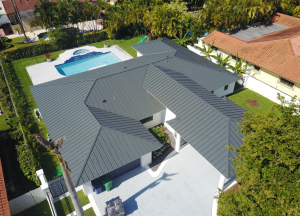
A metal roof gooseneck vent on shingle work solves a similar exhaust problem, but the specification logic is different. The roof plane is flatter, the shingle courses control how the flange is woven into the field, and the installer is working with a different water path than on barrel tile or high-profile tile. Product pages in this category increasingly stress enclosed hoods, internal baffles, and wind-driven rain management because the vent opening itself cannot become the weak point in the roof system.
Why Florida Roof Penetrations Need Closer Review
Florida roof work puts more pressure on every penetration detail. The vent still has to move exhaust, but it also has to perform inside a code and wind environment where weak points at the opening can create bigger problems.
Wind, Approval, And Roof-Assembly Context
In Florida, that decision gets stricter fast. The 8th Edition of the Florida Building Code took effect on December 31, 2023, and Florida’s wind-load guidance says that this edition references ASCE 7-22 for wind-load determination. Miami-Dade’s product approval notices also make clear that Chapter 15 and HVHZ test-protocol changes continue to affect roofing acceptance in South Florida, so vent penetrations have to be read in the same wind-and-approval context as the rest of the roof assembly.
Material Build And Attachment Details
That code context changes how a contractor should read a vent listing. Material gauge matters. Corrosion-resistant coating matters. Fastener layout matters. Design pressure matters too, because the vent becomes part of the roof system once it is cut in, flashed, and fastened. ECM’s Florida evaluation report places its gooseneck in the roofing-accessories category, describes it as 26-gauge steel with an aluminum-zinc alloy corrosion-resistance coating, and lists wood-deck attachment with four ring-shank nails plus mastic.
What To Compare In a Metal Roof Gooseneck Vent
The key comparisons should be made before the vent is ordered. Contractors and specifiers need to know whether the piece matches the roof type, the penetration condition, and the performance demands of the job.
Design Pressure And Product Differentiation
Not every public product page in this category gives the same level of roofing detail. Some listings stay focused on basic exhaust use, light-gauge construction, and accessory features, while others move closer to roofing-specific language around enclosed design, material build, and wind-driven rain performance. What those pages still do not make clear is how widely vent-level design pressure can vary from one product to another.
Design pressure is where ECM separates itself most clearly. East Coast Metals states on its current product page that its gooseneck line carries a design uplift value of -195 lb./sq. ft. and positions that figure as doubling the field. That puts pressure performance directly into the specification decision, especially on Florida tile and shingle work where the opening itself has to hold.
What Contractors Should Verify Before Ordering
Each job still needs to be matched to the roof type, approval scope, pressure demands, and installation condition. On one job the deciding factor may be whether the vent is built for tile or shingle geometry. On another it may be the listed pressure value, the coating, or the attachment method at the deck. Those are the checks that matter during estimating, specification, and inspection.
The basic checks on a metal roof gooseneck vent should stay straightforward. Confirm the roof type, the outlet size, the listed pressure value, and the approval scope that applies to the job. Then confirm the finish, the visible profile fit, and whether the roof condition can use a stock piece or needs custom fabrication instead. That is where product selection stops being generic and starts matching the actual roof in front of the crew.
Fit, Finish, And Fabrication Support
Pressure performance determines whether a vent should be considered at all. Fabrication detail shows up next, once the piece has to match the roof and install consistently across the job. A metal roof gooseneck vent also has to fit the roof visually and physically. ECM’s current page says its goosenecks are offered in eight common tile and shingle colors, including black, brown, bronze, gray, white, and terra-cotta-oriented options, and it highlights laser-cut faces plus prefabricated nail holes at each corner. Those details affect visible roof appearance, installation consistency, and repeatability across the job. That same logic creates a natural publication placeholder for [gooseneck ventilation system] inside the eventual product-authority section.
Standard vent options do not cover every reroof condition, especially when profile, replacement sequencing, or field cuts move the penetration outside a clean stock fit. A contractor may be working around unusual field cuts or a vent location that does not line up cleanly with the standard piece. That is where fabrication capacity becomes relevant. A natural future cross-link to [Custom Metal Shop] belongs in this part of the article because custom metal support directly affects fit, replacement conditions, and non-standard roof details.
Specify East Coast Metals Ventilation Components For Better Roof Fit
East Coast Metals manufactures roof components built for the pressure demands, visible conditions, and installation requirements that matter in Florida roofing work. From stock gooseneck vents to custom-fabricated pieces, we build components that match the roof and install cleanly in the field. Contact us today for more information.
FAQ About Gooseneck Vents On Tile And Shingle Roofs
What Does A Gooseneck Vent Do On A Roof?
A gooseneck vent terminates an exhaust path above the roof while covering the opening in a way that helps shed water away from the penetration. On roofing work, that makes it both an exhaust component and a roof-detail decision.
When Is A Gooseneck Vent Used On A Tile Roof?
It is used when the exhaust path has to terminate through the roof and the penetration has to be matched to the tile profile, flashing condition, and water-shedding geometry of the roof. Tile applications usually require a vent built specifically for tile rather than a generic low-profile roof cap.
Can The Same Gooseneck Vent Be Used On Tile And Shingle Roofs?
Not always. Tile and shingle roofs handle penetration fit, flange integration, and water path control differently, which is why manufacturers commonly offer separate tile and shingle models.
Why Does Design Pressure Matter For A Roof Vent In Florida?
In Florida, a roof vent becomes part of the roof assembly once it is cut in and fastened, so pressure performance matters at the opening itself. Florida’s current code framework references ASCE 7-22 for wind-load determination, which is why penetration details have to be judged inside a broader wind and approval context.
What Should Contractors Verify Before Ordering A Gooseneck Vent?
Start with the roof type, outlet size, listed pressure value, and approval scope that applies to the job. Then verify finish, visible profile fit, and whether the condition can use a stock piece or needs custom fabrication.