


In the HVHZ, roofing paperwork can trip up a job fast. Permit review, approvals, uplift calculations, and component details all have to line up early. This article breaks down HVHZ roofing requirements Florida contractors actually need to manage on the ground, from the approval path and permit package to the edge metals, tile attachments, flashings, and penetrations that can slow a job down before the roof is ready to close.
What The HVHZ Changes For Florida Roofing Work
The High-Velocity Hurricane Zone applies in Miami-Dade and Broward, and the current code baseline is the Florida Building Code, 8th Edition (2023). Miami-Dade’s current Uniform Roofing Application and related roofing documents are issued under the Florida Building Code, 8th Edition (2023), and Broward’s Section 1525 materials use the same 8th Edition HVHZ framework.
Miami-Dade publishes the clearest public roofing forms and inspection guidance for this topic, which is why it carries most of the examples in this article. Broward still uses the same Section 1525 Uniform Roofing Application structure countywide, so the contractor workflow stays aligned across the HVHZ even when local submittal details vary.
What changes inside the HVHZ is how early the job gets pinned to the paperwork. Miami-Dade’s roofing forms ask for roof plans, design pressures, NOAs, underlayment paths, edge details, and attachment information because the county is checking whether the roof package works as one accepted assembly instead of treating each product as a separate callout.
Why HVHZ Roofing Requirements Florida Start With The Approved Assembly
The approval path matters early because the permit file has to show one roof system that holds together from product listing through installation.
Florida Product Approval vs. Miami-Dade Product Control
That review starts with the exact assembly going into the permit file. Florida’s Product Approval search and Miami-Dade’s Product Control system both help verify whether the roof system and its supporting documents line up with the job before installation starts.
For contractors new to the market, HVHZ roofing requirements Florida often involve both databases for different reasons. The Florida Product Approval system is the statewide approval path keyed to the current code version, while Miami-Dade Product Control is the county’s own searchable system for approved products, certificates, and listings used locally. That county database also reaches beyond Miami-Dade because it gives users one searchable place to check products, certificates, and listings approved for use in the county and throughout the country.
What The Submittal Package Has To Prove
The submittal package is where HVHZ roofing requirements Florida stop being broad code talk and turn into a real permit file for a real roof. Broward’s Section 1525 instruction page says the Uniform Roofing Permit Application is used throughout Broward County and supplements the application forms from the individual jurisdictions, while the associated roofing package requires the supporting documents that prove the selected assembly can be accepted.
Those attachments shift with the roof-system section being submitted. In practice, that usually means the file has to support the roof with:
- the correct roof-system section
- the related product-approval material
- design calculations where applicable
- the roof geometry, pressure zones, and system details tied to the same assembly
Once that path is set, the permit file has to prove the roof geometry, pressure zones, and system details all support the same assembly.
What Contractors Need Before They Pull A Permit
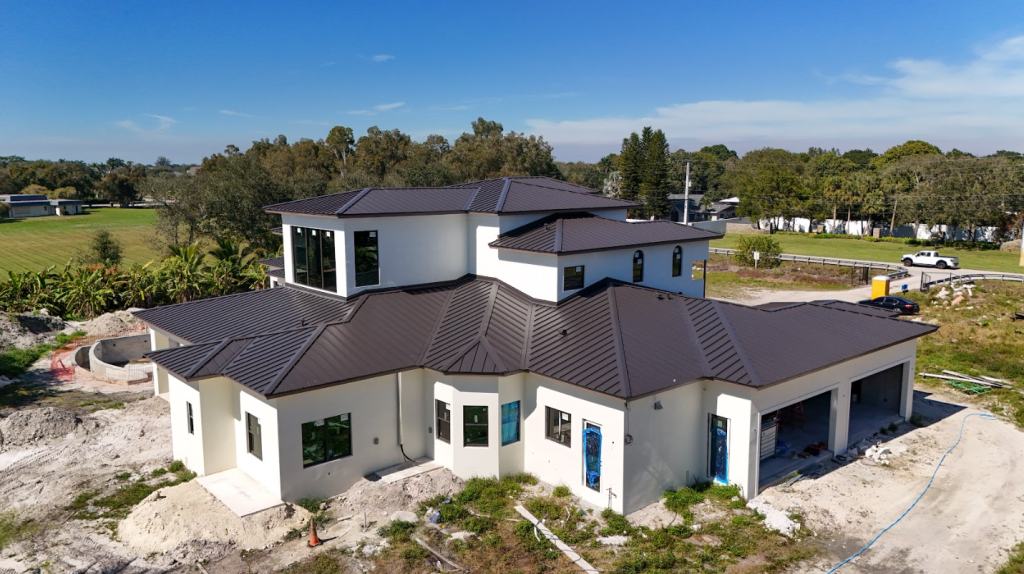
Before the first form gets filled out, the roof conditions and the permit path need to line up.
The Roof Plan Has To Support The Pressure-Zone Logic
Miami-Dade’s hurricane roof application requires a roof plan that shows levels, sections, drains, scuppers, overflow conditions, parapets, and the dimensions of elevated pressure zones. That requirement shows how the county looks at the roof. Geometry, drainage, and pressure exposure are part of the permit path, not background notes that can be sorted out later.
In practical terms, HVHZ roofing requirements Florida start with defining the roof conditions accurately before materials are ordered.
That roof plan is doing more than showing layout. It is where elevated pressure zones, parapets, drainage conditions, and roof geometry get documented for the assembly and attachment decisions that follow later in the permit package.
The System Form Has To Match The Roof Type
Miami-Dade’s roofing-permit page separates the paperwork by roof system, including forms for tile roof systems, metal roof systems, tile calculations, and ridge-ventilation calculations. Broward’s Section 1525 materials likewise identify the Uniform Roofing Permit Application and the attached documentation framework for HVHZ roofing work. That structure matters because HVHZ roofing is not filed as one generic roofing package. The documentation changes with the roof system.
The county roofing forms do not replace the local permit process, and the extra paperwork around them can move a schedule faster than most crews expect. Broward’s forms page says the Uniform Roofing Application supplements the permit application forms from the individual jurisdictions, while Miami-Dade separately posts e-permitting guidance, a Ridge Ventilation Calculations Form requiring under-eave or soffit ventilation to equal or exceed ridge ventilation, and roofing paperwork that asks whether an existing rooftop solar system will be reinstalled.
Tile Roofing Requirements In The HVHZ
Tile roofing is where the paperwork, calculations, and field details start tightening up fast. Miami-Dade’s inspection guidelines tie tile systems to the applicable HVHZ standards and inspection checkpoints, while the county’s current tile roof form asks for the NOA, design pressures, deck type, optional substrate information, base-sheet path, underlayment attachment, cap sheet, tile profile, and tile attachment method. That is a full-system review, not a simple note that the roof will receive tile.
Underlayment, Attachment, And Tile Calculations
The county’s 2023 roofing code-change presentation also makes clear that tile underlayment choices and test paths matter in the HVHZ. Miami-Dade separately published the 8th Edition roofing changes and continues to tie tile permit review back to the applicable underlayment and system requirements. For mechanically attached tile, the county’s guidance points contractors back to the calculation and approval path rather than treating attachment as a field-only decision.
Miami-Dade’s Section E tile-calculation form shows how formal that check is. For moment-based systems, the form says to compare Mr with Mf. For uplift-based systems, it says to compare F’ with Fr under Method 3 per RAS 127, and it states that all calculations must be submitted to the Building Official at the time of permit application. In contractor terms, the selected tile attachment method has to pass the required calculation path tied to the approval and roof conditions, and that calculation package has to be turned in with the permit.
Closures, Valleys, Ridges, And Weep Holes
Tile inspection is where the smaller parts stop looking small. Miami-Dade’s inspection guideline calls out edge metal, valley assemblies, base flashing, counter flashing, hip-and-ridge nailers, rake-tile fasteners, roof-penetration flashing, and weep holes among the field checkpoints. Those details are part of whether the approved roof condition is actually present on the building.
Tile-eave drainage, ridge securement, valley treatment, and flashing transitions are the points where [Eave Closure], [Hip and Ridge Anchor], [Valley Metals], and [Flashings] become part of the approved roof condition.
Metal Roofing Requirements In The HVHZ
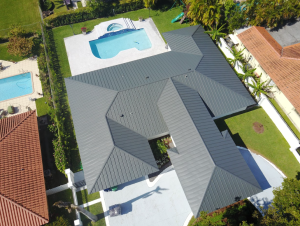
Metal roofing follows the same approval logic, but the pressure points shift toward clips, cleats, edge metal, and fastening schedules. Miami-Dade’s metal roof form asks for the roof system manufacturer, NOA number, minimum design wind pressures, maximum design wind pressures from the NOA-specific system, clip or screw spacing by zone, deck type, substrate information, underlayment type, panel type, drip-edge size and gauge, drip-edge material, fastener type, and hook-strip or cleat gauge.
Attachment, Edge Metal, And System Match
For metal roofing, HVHZ roofing requirements Florida often come down to whether the selected system, attachment spacing, underlayment path, cleats or hook strips, and edge-metal callouts all match the listing. The permit form is defining that full edge and attachment condition before the job moves forward.
The permit file has to define the panel system, edge-metal size, material, and fastening details, which is where [Englert metal roofing system], [PAC-CLAD metal roofing system], and [Drip Edge Metals] enter the metal roof package.
Miami-Dade’s 2023 roofing code-change material also notes that qualifying standing seam systems can be permitted down to a 1:12 minimum slope when they meet the applicable static water leakage criteria. That can open up more options on the metal side, but the system still has to follow the approved listing from submittal through installation.
The Components That Commonly Decide Whether A Roof Package Holds Up At Review And Inspection
Inspection is where perimeter metals, valleys, flashings, attachment details, and penetrations move from the permit file to field verification. Miami-Dade’s roofing inspection guidance checks those conditions against the approved construction documents, which is where the right component choices start paying off.
Perimeter And Transition Components
Perimeter and transition details are where a lot of review and inspection friction starts. The county materials keep returning to drip edge, flashing, valleys, counter flashing, and related roof-edge conditions because those parts tie water management, uplift resistance, and assembly continuity together. Edge transitions, drainage paths, and flashing conditions are where [roofing components], [Drip Edge Metals], [Valley Metals], and [Flashings] start affecting review comments and inspection results.
Base flashing, counter flashing, and related metal edge details are not loose field calls in the HVHZ. Miami-Dade’s inspection guidance ties base flashing and counter flashing back to RAS 111, and the county’s 8th Edition roofing code-change material also references RAS 111 in the drip-edge detail requirements.
Miami-Dade’s forms library reinforces how serious those perimeter conditions are. The county publishes dedicated HVHZ detail forms for coping, gutter conditions, parapet walls, edge conditions, and wood-nailer edges, which tells contractors that perimeter details are not treated as finish items at plan review.
Penetrations And Ventilation Details
Penetrations deserve their own attention because the county treats them as their own roofing condition. Miami-Dade’s forms ask about vent stacks and related roof conditions, and the inspection guidance separately checks penetration flashing and stack flashing. That is why penetrations should be treated as planned assembly details, not something patched into the system late.
A vent penetration has to be handled as part of the approved roof condition from the start, which is where [ECM Gooseneck Ventilation System] belongs in the assembly.
When the permit package, attachment path, and fabricated components are aligned from the start, HVHZ work tends to move with fewer avoidable surprises.
Work With East Coast Metals Roofing Components Built For HVHZ Jobs
Work with East Coast Metals when the job calls for roofing components that need to be formed for the roof conditions in front of you. In the HVHZ, better-fit metal details can help reduce avoidable field fixes and review trouble. Contact us today for more information.
Frequently Asked Questions About HVHZ Roofing Requirements In Florida
A few questions come up on almost every HVHZ roofing job, especially when crews are entering Miami-Dade or Broward for the first time.
What Counties In Florida Fall Under The HVHZ For Roofing Work?
For roofing work, the High-Velocity Hurricane Zone applies in Miami-Dade and Broward. That is why contractors working in those counties run into stricter permit documentation, approval checks, and assembly-specific review than they would in most other parts of the state.
Do HVHZ Roofing Jobs Require A Miami-Dade NOA Or A Florida Product Approval?
They can involve either or both, depending on the roof system and the approval path tied to the job. Florida Product Approval is the statewide system, while Miami-Dade Product Control is the county’s searchable approval system for products, certificates, and listings used in HVHZ work.
Why Do HVHZ Roofing Permits Ask For So Much Detail About Edge Metal, Flashing, And Attachment?
In the HVHZ, those details are part of the roof assembly the permit file is trying to verify. Edge metal, flashing, attachment spacing, ridge treatment, and penetration details can all affect whether the installed roof matches the approved system.
Are Tile And Metal Roofing Reviewed The Same Way In The HVHZ?
No. Both are reviewed as assemblies, but the forms, calculations, and attachment checks are different. Tile work brings in underlayment paths, attachment calculations, and tile-specific requirements, while metal systems focus more heavily on clips, cleats, fastening schedules, edge metal, and listed assembly details.
Can A Roofing Job Get Held Up Before Inspection In The HVHZ?
Yes. A lot of HVHZ delays happen during permit review or re-submittal when the roof plan, approval documents, calculations, and component details do not line up. That is why contractors usually have a smoother path when the permit file and the roof package are built together early.